Turbulence Forecasting Today and Tomorrow: How Reliable Is It?
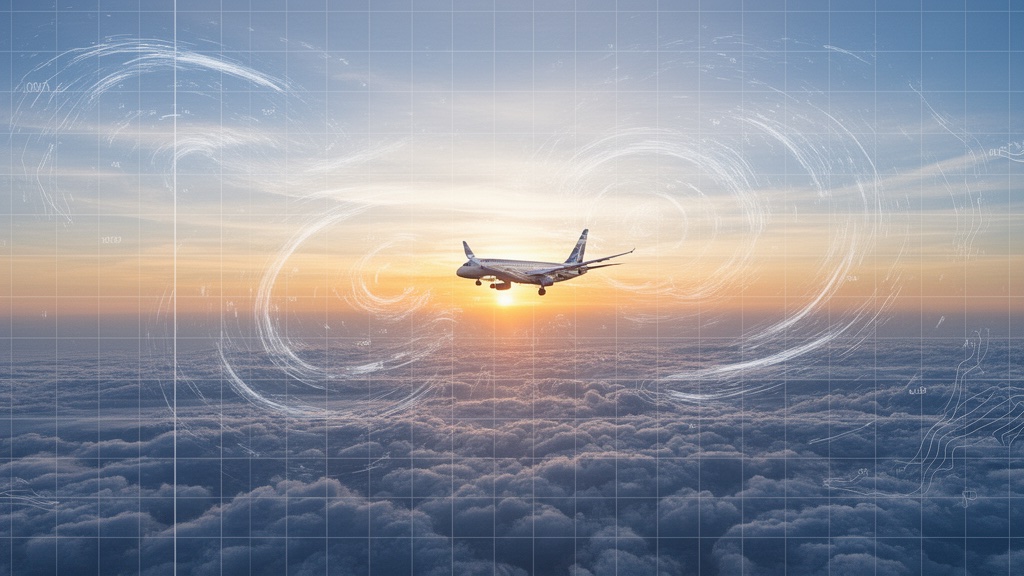
Turbulence forecasting has come a long way, yet there is still a huge gap between what passengers expect and what the atmosphere delivers. Most flyers assume turbulence is either fully predictable or completely random, but the truth lives somewhere in the middle. Modern forecasts use a mix of numerical weather models, vertical wind shear calculations, jet stream detection, convective analysis, and increasingly sophisticated data fusion techniques. Still, the atmosphere is chaotic, and even the best forecasts struggle with sudden convective spikes, rapidly changing jet streaks, or areas with sparse observational data such as oceans. As turbulence becomes more common due to shifting jet streams and a warming climate, understanding both the power and the limitations of forecasting is more important than ever.
Quick Answer
How accurate is turbulence forecasting? Modern turbulence forecasts correctly identify most significant turbulence events, but they cannot predict every bump. Forecasts work best for large-scale patterns like jet stream turbulence and worst for sudden convective events and areas with limited data. Think of forecasts as risk maps rather than guarantees - they show where rough air is more likely, not exactly when each bump will occur.
Turbulence Is Increasing, But Forecasting Tools Are Not Equal
Several studies show that clear air turbulence is becoming more frequent in major flight corridors due to climate-driven changes in jet stream intensity. Pilots are reporting unexpected bumps even on traditionally calm routes, and airlines are increasingly relying on automated forecasts instead of manual PIREPs.
But not all forecasting tools operate on the same assumptions or prioritize the same atmospheric inputs. Most legacy systems lean heavily on EDR values or model-based shear detection, while newer platforms combine machine learning, high-resolution vertical velocity fields, LIDAR data when available, satellite imagery, and post-event validation loops.
Tools that treat the atmosphere as static or rely solely on model-derived turbulence signatures often miss micro-scale disruptions that passengers feel most. The difference between a forecast that says "smooth" and the reality of light-to-moderate chop can come down to which data sources the system prioritizes.
Why Forecasts Sometimes Miss Turbulence Entirely
Forecast failures usually come from three sources:
- Sudden convective growth - Storm cells can intensify within minutes and then die just as fast. Convective turbulence is notoriously unpredictable because the atmosphere can change faster than models update.
- Model resolution limits - Numerical models cannot always resolve small-scale eddies that form along jet stream boundaries or over mountainous terrain. The turbulence you feel might be smaller than the grid spacing the model uses.
- Lack of in-situ data - Over oceans and remote areas, there is still very limited real-world turbulence reporting compared to continental airspace. Satellites can see clouds but not invisible wind shear.
Even the best algorithms struggle when the atmosphere behaves in ways that differ from the model's assumptions. It is not that forecasts are wrong; it is that the atmosphere is more dynamic than any system can perfectly track.
The Future: More Data, More Sensors, More Precision
The next leap in turbulence forecasting will come from real-time sensors rather than larger models. Here's what's on the horizon:
Aircraft-Mounted LIDAR
LIDAR technology is already capable of seeing turbulence ahead of an aircraft, giving pilots several minutes of warning. The challenge is cost and weight - currently only a handful of aircraft carry these systems. As the technology becomes cheaper and lighter, expect wider adoption.
Crowd-Sourced Turbulence Data
Imagine thousands of airliners continuously reporting their turbulence encounters in real-time, creating a global mesh of observations that feed directly into predictive models. This is already happening to some extent, and the density of reporting will only increase.
AI and Machine Learning
AI will play a role, but only in combination with better measurements. Machine learning excels at finding patterns in complex data - connecting wind shear signatures, vertical motion indicators, and thermal gradients in ways that traditional algorithms miss. The key is feeding these systems with high-quality, real-time observations.
Climate-Aware Routing
As jet streams shift and intensify due to climate change, flight planning will need to adapt. Expect more dynamic routing that considers not just current conditions but predicted turbulence patterns hours ahead. Some airlines are already experimenting with adaptive altitude strategies that respond to real-time turbulence reports.
The goal is not to eliminate turbulence entirely - that is impossible - but to reduce surprise events and give pilots and passengers clearer expectations about what lies ahead.
What This Means for Flyers Today
For now, turbulence forecasts are best understood as guidance, not promises. They identify regions where rough air is more likely, but they cannot predict every bump on every flight. Passengers should read forecasts as risk maps rather than guarantees, and pilots already use them that way.
Even as turbulence becomes more common globally, aircraft remain structurally safe, and modern forecasting allows airlines to avoid most of the severe events that were once routine. The real challenge for the industry is communicating probabilities and uncertainty honestly while continuing to improve accuracy with better sensors and smarter models.
How to Use Turbulence Forecasts Wisely
- Check forecasts before your flight - Tools like ZeroTurb combine multiple data sources to give you the best available picture
- Understand the uncertainty - A forecast showing "light turbulence" means that's the most likely outcome, not a guarantee
- Keep your seatbelt fastened - The best protection against unexpected turbulence is always being buckled in
- Trust the process - Even imperfect forecasts help pilots and airlines make better decisions that improve your safety
Frequently Asked Questions About Turbulence Forecasting
How accurate are turbulence forecasts?
Modern turbulence forecasts correctly identify the majority of significant turbulence events, especially those caused by jet streams and large-scale weather systems. However, they struggle with sudden convective turbulence and small-scale eddies. Accuracy varies by region - continental airspace with dense reporting networks has better forecasts than oceanic routes. Think of accuracy in terms of risk identification rather than precise prediction.
Why is turbulence increasing due to climate change?
Climate change is intensifying jet streams by increasing the temperature difference between equatorial and polar regions at high altitudes. Stronger jet streams create more wind shear at their boundaries, which is the primary cause of clear air turbulence. Some studies predict CAT could increase by 50-100% in major flight corridors over the coming decades. This makes better forecasting increasingly important.
What technology will improve turbulence forecasting in the future?
Key technologies include aircraft-mounted LIDAR that can detect turbulence ahead, crowd-sourced real-time reporting from commercial aircraft, AI and machine learning for pattern recognition, and higher-resolution weather models. The combination of better sensors and smarter algorithms will enable more accurate, localized, and timely turbulence predictions.
Why can't we predict turbulence perfectly?
The atmosphere is a chaotic system where small changes can produce large effects. Turbulence often occurs at scales smaller than weather model resolution, and it can develop faster than forecast updates. Some turbulence - especially convective turbulence near thunderstorms - forms within minutes. Perfect prediction would require measuring every air molecule, which is physically impossible. The goal is continuous improvement, not perfection.
Should I trust turbulence forecasts when planning my flight?
Yes, but with realistic expectations. Forecasts provide valuable guidance about where turbulence is more likely, helping you prepare mentally and physically for your flight. They're most reliable for identifying large-scale patterns and least reliable for predicting exact bump locations and timing. Use forecasts to inform your expectations, keep your seatbelt fastened regardless, and remember that even in turbulent conditions, you're safe.
The Bottom Line
Turbulence forecasting sits at an interesting inflection point. Current technology catches most significant events but cannot promise a bump-free flight. The future holds considerable promise - better sensors, smarter algorithms, and denser observation networks will all contribute to improved predictions.
For passengers, the practical advice remains constant: check forecasts to know what to expect, keep your seatbelt fastened, and trust that even when forecasts miss something, you're flying in an aircraft designed to handle far worse than anything the atmosphere can produce.
The gap between passenger expectations and atmospheric reality may never fully close, but it's narrowing. Every year brings better data, better models, and better tools for understanding what the sky has in store.